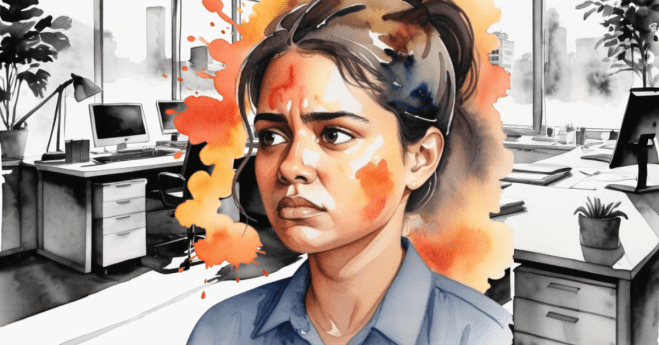
Whether at an office, a business or at home, most of us spend a considerable amount of time working. This is a fundamental part of us as our economic systems demand productivity so we can acquire resources for a living.
Unfortunately, the work sphere is barely arriving to the realization of the importance of mental health. How many people work in a toxic environment? Does your workload have a negative impact on you? How many of us have called in sick to conceal a bad mental health day? If you live with a mental health condition, do you disclose it at work; do you feel safe to do so?

Some experiences at work from people who live with BPD:
“I was in the middle of a meeting with my manager, days had been difficult and overloaded with work. She said that she was concerned about my capability to manage my emotions during such days. I felt triggered and although I tried my best, I could not avoid shedding a tear, her face changed. I had the impression I was being judged.
I was angry at myself and deeply embarrassed for a while. I felt that I had failed to regulate my emotions; and I had proven her point.
A month before this incident, I had decided to share with colleagues that I have BPD. I cannot help but to feel that this disclosure created prejudice against me. This hurt me.
The reality is that crying should not be something to be ashamed of. As long as we deliver at work, it is important to understand that we are all different, with or without BPD, and everyone has a preferred way of working which can help us reach our full potential“.
– Anonymous
“The international organization I work for deeply praises itself internally and externally about their policies around mental health and non-discrimination. They do not walk the talk.
It is true that they deliver trainings to raise awareness, but very few team leaders attend. There is a huge amount of information about raising concerns, but processes are bureaucratic challenges, and they rarely reach a solution. Their vision claims to embrace and value everyone’s differences, but individuals who do not match the norm do not access equal opportunity.
Years ago, I committed myself to doing all the work required to be stable; and this helped me flourish at work. I am highly scored in my performance evaluations; and year after year I have demonstrated that my contributions are valuable.
After the pandemic, I was able to request what they call “reasonable adjustments” to work from home 3 days instead of 2 per week; and I continued to thrive.
Eventually I felt deeply interested in working in crisis scenarios. This requires sharp focus, good stress management, quick and accurate response; and resilience. I started taking remote crisis roles and continued to do great! I even got to the point of delivering trainings and creating guidance for many countries. I felt accomplished.
Then I decided to apply to a crisis position that entails deployment from time to time. It is a very complex and demanded recruitment, but I was successful. I officially received an acceptance email. I was very proud of myself and looking forward to the future of the career I wanted to pursue so badly.
The bubble was burst when a very senior colleague, whose goal was to get me back in the office 3 days per week with no rationale, found about my diagnosis. Full of ignorance and prejudice they said: “I do not see someone with what you have in the crisis team”. This person was completely unaware of my performance, of my hard work and contributions to the crisis team; and most importantly, of BPD. What do I have?! What does it mean? Explain!- I screamed internally.
Long story short, they flagged it to the crisis group, and they decided that my opportunity was lost. They offered me to take an assessment, I guess they want to evaluate how crazy I am; although during my last meeting I was told I would be checked physically only. I don´t get it.
Nobody dares to state that the organization has an issue with my BPD regardless of everything that I have demonstrated and proven”.
– Anonymous
We live in a world aligned to hegemony. Male, white, straight, cis, from a privileged economical and academic background, with no disability, neurotypical, etc., are the standard. This is ridiculous as only a minority of the world’s population fits in that “category.”
It sucks and it is frustrating, but currently things are this way. The structures we work in are comfortable with uniformity and proactively promote it; and we are all demanded to comply with no questions.

Some people are highly functional in the mornings, some work best in the afternoon. Some perform very well when working at home, some prefer going to their workplace. Some are main caregivers; and their schedules can be exhausting. Some find communication via email more efficient than through meetings. Everyone organizes and manages their workload in a different way. Some are expected to be available no matter the time. Some need more toilet breaks. Some are introverted, some are extroverted. Some are strategic while some are creative. Some have a long commute to work, and some are walking distance…but none of these matter. Most of us are expected to join a single way of working, of being.
Even worse, many of us have been taught to define ourselves based on work.
In practice there is very little room for the fact that taking on our diversities can help us thrive professionally. Usually, our employer’s goals are for us to be productive, but few of them consider that some arrangements can make staff more effective, more committed, even happier.
Sometimes, when our diagnoses are disclosed, we disappear. We become the name of our condition and all the prejudice that comes with it. We might often find ourselves proving that we are valuable according to the norms “DESPITE “our mental conditions in the workplace; which does not help raise awareness, does not embrace the richness of diversity; and strengths stigma.
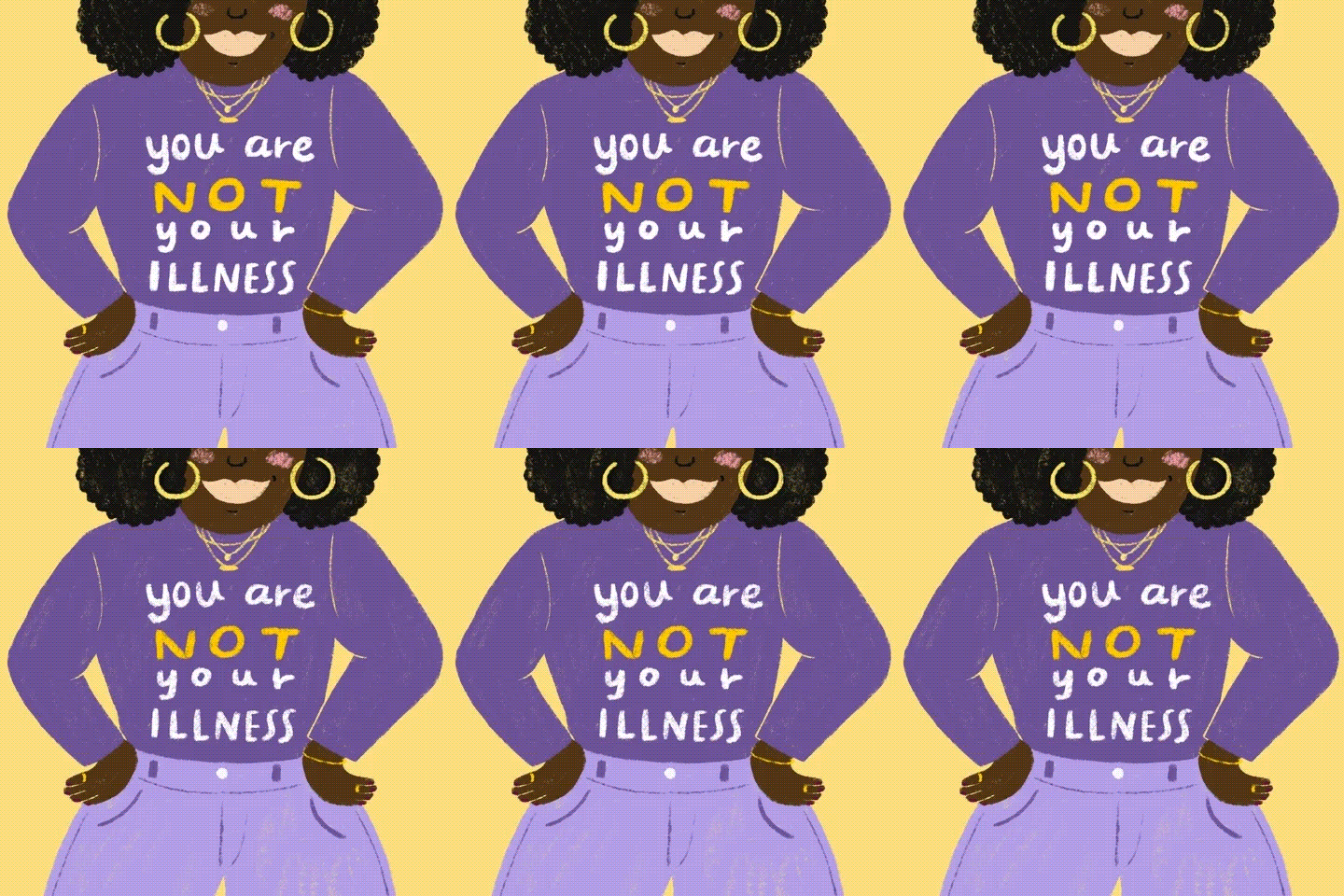
The World Health Organization says:
Mental health problems have a direct impact on workplaces through increasing absenteeism, reducing productivity, and increasing healthcare costs. However, stigma and lack of awareness of mental health persist as barriers to addressing mental health in the workplace.
With 60% of the global population in work, urgent action is needed to ensure work prevents risks to mental health and protects and supports mental health at work. Employers and coworkers can be agents of change in the workplace by combatting stigma and encouraging open discussion on mental health. They can also learn to identify the signs of common mental health problems such as depression and encourage colleagues who may be struggling to seek help.
The UN’s Convention on the Rights of Persons with Disabilities describes disability as:
The systematic distinction, exclusion or restriction on the basis of disability which has the purpose or effect of impairing or nullifying the recognition, enjoyment or exercise, on an equal basis with others, of all human rights and fundamental freedoms in the political, economic, social, cultural, civil or any other field. It includes all forms of discrimination.
Note then that the environment is what is disabling, NOT the traits of a person.
Let’s be clear, we are not to use mental illness as an excuse. We should aim to be functional, but functionality is reached differently by everyone.
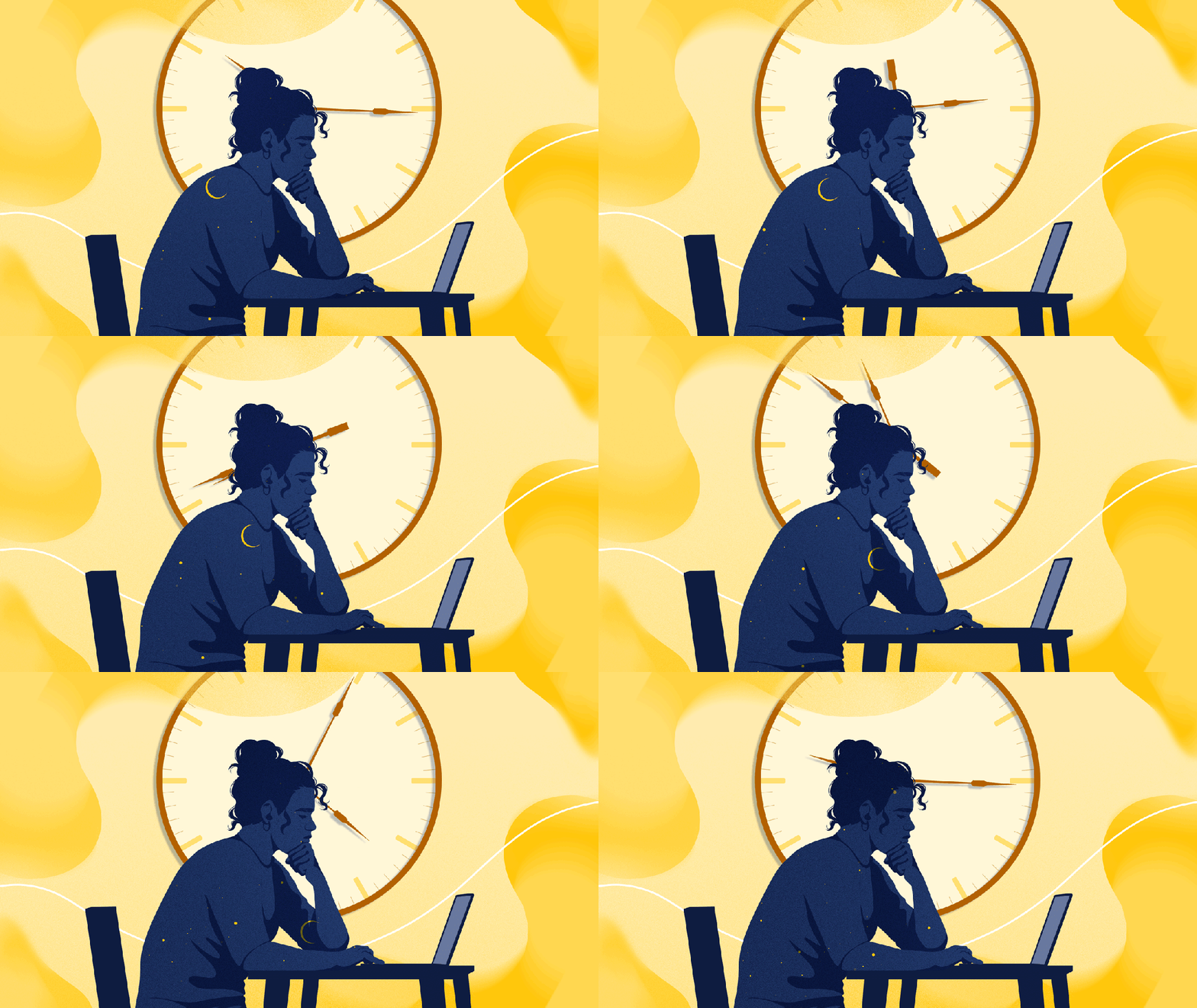
Us, people who live with BPD, depression, bipolar disorder, anxiety, ADHD, and more, can prosper and bloom; but the real creation and implementation of mental health policies are fundamental.
While the world moves slowly towards this objective, we invite you to champion for mental health wellness and inclusion at work as much as you can.
Who you are is OK.
You are NOT broken.
Work DOES NOT determine your worth.
Our community is an agent of change, let’s embrace that.
Download free images and mark World Mental Health Day!
 The Borderline Project
So true, very interesting, thanks.
LikeLike